Safari Outfit Ideas With Utility Jacket, Tank Top & Khaki Shorts
Packing for a safari is its own special kind of chaos. It’s not a beach trip, it’s not a hiking trip, and it’s definitely not your regular city wardrobe. You need clothes that can handle dust, sun, and a jeep that bounces over every rock in its path, and somehow also look decent in photos — because let’s be real, the outfit pics matter almost as much as the actual lion sighting.
I dug into what actually holds up on safari, not just what looks cute on a hanger back home, and the answer keeps coming back to the same three pieces: a utility jacket, a simple tank top, and a pair of khaki shorts. It’s practical, it photographs beautifully against that golden savanna light, and it layers easily for those wild temperature swings between sunrise and noon. Below, I’ll walk you through how to build this look, what to skip, and how to tweak it depending on where you’re headed — Kenya, Cape Town, or a desert safari somewhere entirely different.
Why the Utility Jacket, Tank Top, and Khaki Shorts Combo Works
Every safari style roundup mentions this trio, and it’s not because it photographs well on Pinterest (though it does). Each piece is doing a real job.
The tank top deals with the heat. Game drives usually start before sunrise, when it’s genuinely cold, but by 9 a.m. you’re sweating through everything you’ve got on. A breathable tank underneath means you can shed layers without stripping down to nothing in front of your whole tour group.
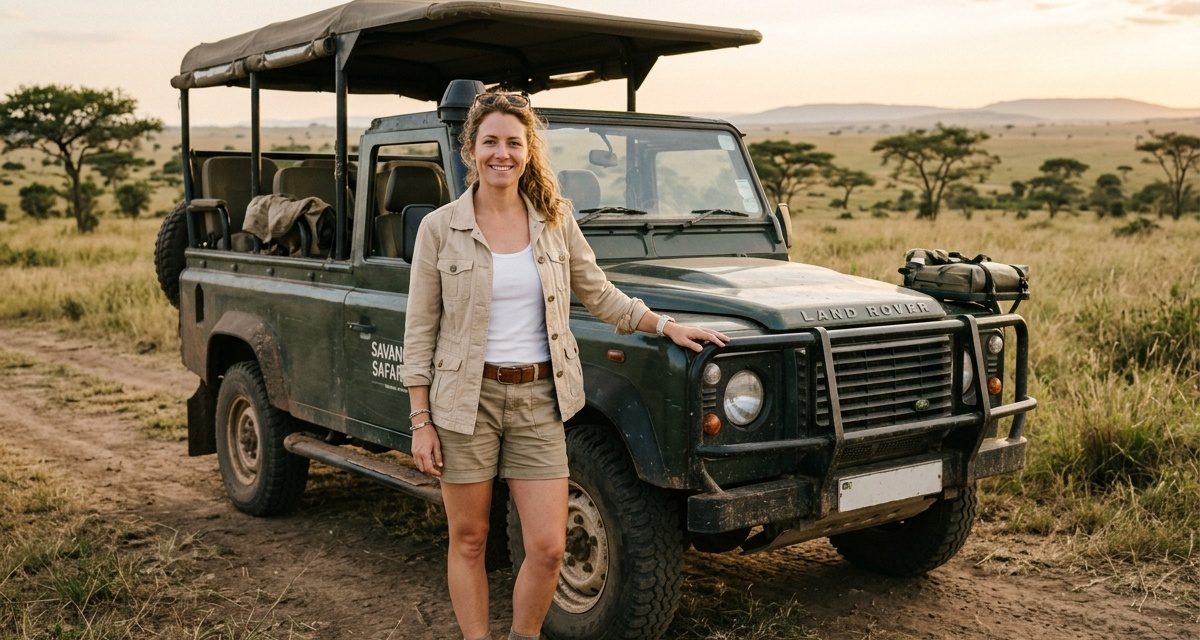
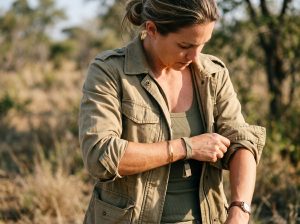
The jacket is the real workhorse, though. Those pockets hold your phone, sunscreen, lip balm, maybe a granola bar you forgot about — all without needing a bag that swings around on a bumpy dirt road. It shields your arms from sun and thorny brush too, and somehow still looks intentional instead of like you grabbed a windbreaker on your way out the door.
And the khaki shorts? They keep you cool when the heat gets serious, while still reading as “safari” instead of “random hiking trail.” You get full range of motion for climbing in and out of vehicles, and the look carries you from an early drive straight through to lunch at the lodge without a costume change.
Building Your Base: Choosing the Right Tank Top
Nobody talks about the tank top, but it’s the piece doing the quiet, unglamorous work. Skip anything with a busy print or delicate fabric — this thing needs to survive dust, sweat, and the occasional sink rinse at your lodge.
Go for moisture-wicking fabric or a lightweight cotton-poly blend. A ribbed tank in cream, white, or olive pairs with nearly every bottom you’ll pack, and that matters more than you’d think when you’re trying to travel light for a multi-day trip. Skip anything too fitted, too — a slightly relaxed cut breathes better and won’t cling once you start sweating through the morning drive.
A few things worth knowing before you pack:
- Bring at least two or three tanks if you’re out there more than three days. You will sweat through them, guaranteed.
- Skip black or anything dark in hot climates — it soaks up heat and shows every speck of dust.
- A tank with a built-in shelf bra saves you from wearing a separate sports bra under your jacket.
The Utility Jacket: Your Safari MVP
If there’s one piece worth spending real money on, it’s this one. A good utility jacket earns its keep more than anything else you’ll pack, and it’s the piece that ends up in every single sunset photo you take.
What to Look For
Go with a lightweight cotton or linen-blend twill. Heavy denim will make you miserable by 10 a.m., trust me. Multiple flap pockets aren’t just there for looks — they’re genuinely handy for keeping your hands free during a drive. A relaxed, slightly oversized fit also lets you layer a tank underneath without feeling boxed in when you’re leaning out for a photo.
Styling It Right
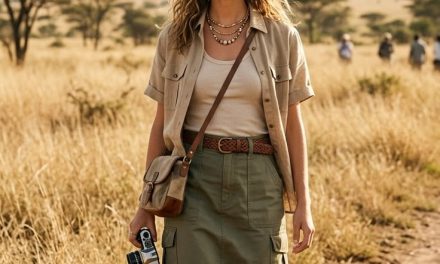
Roll the sleeves up to three-quarter length instead of buttoning everything up like you’re walking into a board meeting. Leave a couple buttons undone at the top so the tank peeks through. If your jacket doesn’t already have one, cinch the waist with a thin belt — it turns a boxy silhouette into something that actually looks put together.
This jacket also becomes your best friend once the sun drops. Evening drives and lodge dinners can get surprisingly cold, and having something you can throw on over your tank without an entire outfit change saves both time and suitcase space.
Khaki Shorts vs. Cargo Pants: Which Should You Pack
This is the debate everyone has with themselves at 11 p.m. the night before departure. Honestly? Pack both if you can. They handle different moments.
Khaki shorts work best for:
- Midday heat on game drives
- Lounging at the lodge pool
- Warmer regions like coastal Kenya or parts of Botswana
Cargo pants are the better call for:
- Early morning and evening drives when it’s cold
- Bush walks where thorns, ticks, or brush are a real concern
- Areas with heavier mosquito activity, where covering your legs actually matters
If you’re building this outfit around the jacket-and-tank combo specifically, mid-thigh to knee-length khaki shorts hit the sweet spot. Too short and it feels out of place at a lodge; too baggy and you lose the clean look this whole outfit is going for. A pair with a few functional pockets — not just decorative ones — rounds things out nicely, no extra bag required.
Footwear That Won’t Ruin Your Safari Ootd
I’ve seen plenty of great outfits fall apart because of the shoes. This isn’t the place for brand-new sneakers or anything with a slick sole — jeeps kick up serious dust, and you’ll walk on more gravel than you’d expect.
Your best options:
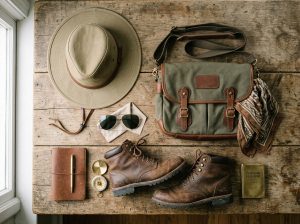
- Lace-up desert boots or ankle boots — sturdy, dust-resistant, and they look great with rolled cargo pants or shorts.
- Closed-toe hiking sandals — solid pick for warmer safaris where you still want some airflow.
- Broken-in sneakers in a neutral tone — fine around the lodge, less great for actual bush walks.
Steer clear of flip-flops or anything strappy and delicate for the actual game drives. Save those for pool time. And please, break in new boots before you leave home — nothing wrecks day one of a trip faster than a fresh blister.
Accessorizing Your Safari Look
The right accessories tie safari fits together without making you look like you tried too hard. A handful of staples carry most of the weight here.
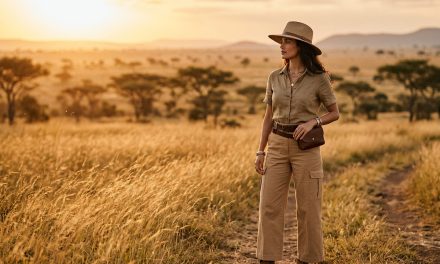
A wide-brim hat isn’t optional, in my opinion. It’s real sun protection, and it’s also the one item that instantly reads “safari” in every photo. Grab a structured straw or canvas hat rather than anything floppy that’ll blow off the second your jeep picks up speed.
Sunglasses with a slightly oversized or aviator frame fit the vibe and cut down glare that’s stronger than you’d guess out on the open plains. A canvas or leather crossbody bag frees up your hands and holds your camera, phone, and sunscreen without competing with your jacket pockets. Skip anything with shiny metallic hardware — it catches sun and can spook wildlife, and subtle wins here anyway.
Layered bracelets or a simple pendant add personality without looking fussy. Keep jewelry minimal overall. You don’t want anything dangling or snagging on your jacket zipper while you’re climbing in and out of the vehicle for the fifth time that morning.
Color Palette: Why Neutral Tones Aren’t Just a Trend
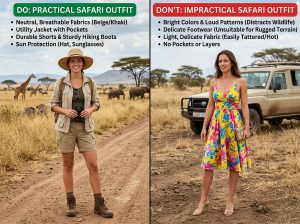
Every safari guide tells you to stick to neutrals, and it’s not purely an aesthetic thing — although yes, it does look incredible against that dusty gold landscape. Earth tones like khaki, olive, sand, and warm brown blend into the environment, and animals are far less startled by muted colors than by anything bright or dark.
There’s a dust factor, too. Light neutrals hide dirt far better than black does, and they don’t trap heat the way dark fabric does under direct sun for hours at a stretch. That said, you don’t need to wear one single shade head to toe. Mixing sand, olive, and cream within the same outfit still reads as cohesive, and it gives you a bit more visual interest than an all-one-color look.
A few colors worth skipping entirely:
- Bright white — shows dirt almost instantly and can startle animals in strong light.
- Black and dark navy — these attract tsetse flies in certain regions, and that’s genuinely unpleasant.
- Bold prints or neon — they stand out against the landscape and can spook wildlife during close encounters.
Desert Safari Outfit Adjustments
If your trip leans more desert — Dubai’s desert safaris, Wadi Rum, Namibia’s dunes — your outfit needs a few changes. Sand and sun behave differently out there, and the temperature swings get even more extreme.
Swap shorts for lightweight, breathable pants or a longer skirt during the day. Desert sun is intense, even in shade, more than most people expect. Keep the tank and jacket combo going, but add a lightweight scarf or shemagh-style wrap — it protects your neck and doubles as face coverage if the wind kicks up sand. Closed shoes are non-negotiable in the desert. Open sandals let sand in everywhere, and the ground gets surprisingly hot underfoot by midday.
Evening desert safaris, especially the kind with a camp dinner under the stars, tend to get cold fast once the sun disappears. Pack a warmer layer beyond just the jacket — a lightweight sweater works well underneath.
Cape Town and Coastal Safari Outfit Tweaks
A lot of travelers pair a safari trip with a stop in Cape Town, and the styling needs shift here too. Cape Town’s weather is famously unpredictable — sun, wind, and rain can all happen in the same afternoon — so your safari pieces need to flex into something more city-appropriate.
For Cape Town outfits, keep the utility jacket as your anchor, but swap the khaki shorts for straight-leg jeans or tailored trousers when you’re wandering the V&A Waterfront or wine country. The tank top still works as a layer under a light sweater. Grab a crossbody bag with a zip closure, since coastal wind turns an open tote into a real hassle.
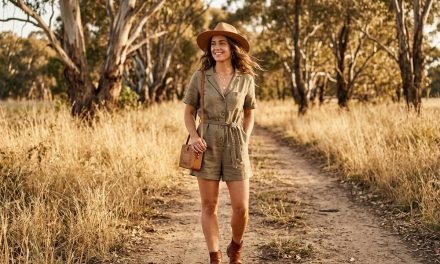
If you’re doing a coastal day trip or beach stop, this is where you can lean into a breezier version of the safari look — linen shorts, a straw hat, sandals instead of boots.
Common Safari Outfit Mistakes to Avoid
I’ve read through a lot of post-trip regrets while researching this, and the same handful of mistakes come up over and over.
Overpacking cute-but-impractical pieces. That flowy sundress looks perfect in your head and turns into a nightmare in a dusty jeep with wind whipping through it. Save the statement pieces for lodge dinners.
Wearing brand-new shoes. This is the number one regret people mention, hands down. Break in your boots at home, not on day one of your trip.
Skipping layers for temperature swings. Mornings and evenings can get genuinely cold, even somewhere you’d assume is hot year-round. A jacket you can add or shed easily is essential, not optional.
Choosing dark colors. Beyond the bug problem, dark fabric gets unbearably hot under direct sun over a full day out.
Skipping sun protection accessories. A hat and sunglasses aren’t extras here. Sun exposure during a full-day game drive is intense, sunscreen or not.
Bringing scented products. Perfume, scented lotion, strong deodorant — all of it can attract insects and, on walking safaris, even animals. Stick to unscented where you can.
Who This Outfit Formula Is Best For
Not every traveler needs the exact same setup. Here’s who this jacket-tank-shorts formula suits best, and who might want to adjust it a bit.
Great for:
- First-timers who want one reliable outfit that works across multiple days
- Warm-weather safaris in East and Southern Africa — Kenya, Tanzania, Botswana
- Anyone who wants a look that goes from game drive to lodge lunch without changing
- Photo-focused travelers, since this combo is genuinely one of the most photogenic safari looks out there
Might need adjusting for:
- Cooler-season safaris (June through August in Southern Africa can get chilly, especially at dawn) — pack warmer layers
- Walking safaris through tick or thorn-heavy brush, where cargo pants offer more coverage than shorts
- Desert-specific trips, where sun and sand exposure call for more coverage overall
Packing List Recap
Here’s the quick-reference version, worth screenshotting before you start packing.
- 2–3 breathable tank tops (cream, olive, or white)
- 1 lightweight cotton or linen-blend utility jacket
- 2 pairs khaki shorts, knee-length or mid-thigh
- 1 pair cargo pants for cooler drives or walking safaris
- Closed-toe boots or hiking sandals
- Wide-brim hat and sunglasses
- Crossbody bag with zip closure
- Lightweight scarf or wrap, especially for desert trips
- Minimal, non-dangling jewelry
- Unscented sunscreen, lip balm, and bug spray
Final Thoughts
The best safari outfit is the one you can forget about the second you spot your first elephant, because you don’t want to be fussing with a wardrobe malfunction during the one moment you’ve been waiting months for. This jacket, tank, and shorts combo works because it puts function first and style second — which, honestly, is the right order for a trip like this.
Build your version around solid basics in neutral tones, adjust for wherever you’re actually headed, and don’t skip breaking in your shoes ahead of time. Do that, and you’ll end up with an outfit that keeps up with those early morning drives and still looks great in the photos you’ll be showing off for years.
FAQ
What should I wear on a safari as a woman? A layered outfit built around a breathable tank top, a lightweight utility jacket, and khaki shorts or cargo pants works well for most safaris. Stick to neutral, earth-toned colors, closed-toe boots, and sun accessories like a wide-brim hat.
Can I wear jeans on safari? Jeans are fine for evenings at the lodge or travel days, but they’re not great for actual game drives. Denim is heavy, doesn’t breathe well, and gets uncomfortably hot by midday.
Why do safari outfits avoid black and dark colors? Dark colors, particularly black and navy, tend to attract tsetse flies in parts of Africa, and they soak up more heat under direct sun, making you noticeably warmer during long drives.
Are khaki shorts appropriate for all safari destinations? They work great for warm-weather safaris in East and Southern Africa, but for desert safaris or walking safaris through brush, lightweight pants offer better protection from sun, sand, and thorns.
What shoes are best for a safari? Closed-toe boots or sturdy hiking sandals are your best bet. Skip flip-flops or anything brand-new you haven’t broken in, since you’ll be walking on uneven, dusty terrain more than you’d expect.
Do I need a jacket for a safari if it’s hot during the day? Yes. Mornings and evenings tend to be much colder than midday, even in generally warm climates, so a lightweight jacket you can layer on and off makes a real difference in comfort.
Affiliate Product Recommendation
Product Name: Women’s Lightweight Cotton Utility Safari Jacket
Why It Helps: This is the single most versatile piece in the whole outfit formula above. A good utility jacket rides out temperature swings, gives you functional pocket storage during game drives, and works as both a daytime piece and an evening layer without eating up suitcase space.
Key Features :
- Lightweight, breathable cotton or cotton-blend fabric
- Multiple flap or zip pockets for hands-free storage
- Adjustable cuffs and a relaxed, roll-sleeve friendly fit
- Neutral color options suited to safari and travel wardrobes
Who Should Buy It: Anyone planning a safari, desert trip, or warm-weather travel that involves a lot of outdoor time and shifting temperatures throughout the day.
Pros:
- Multi-functional — works for game drives, city days, and layering
- Practical storage without needing a separate bag
- Photographs well and suits a range of body types thanks to the relaxed cut
Cons:
- Not heavily insulated, so it won’t be enough on its own for genuinely cold evenings
- Fit can run large on some brands, so check size charts carefully