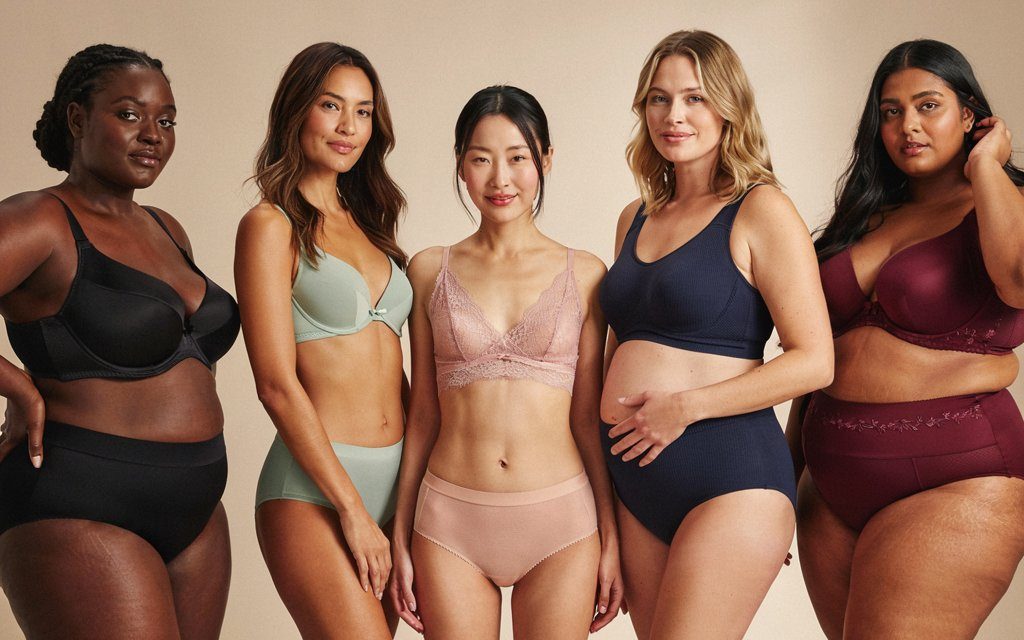
How to Choose the Right Bra Size (Especially If You’re Plus Size and Tired of Guessing)
If you’ve ever stood in a fitting room close to tears because nothing fits right, you’re not alone. Something like 80% of women are wearing the wrong bra size, and for plus size women, that number climbs even higher — mostly because most stores stop stocking real options right around a DD cup, like larger chests just stopped existing. They didn’t. You just got left with fewer choices and worse advice.
This guide is for anyone who’s sick of straps digging in, cups gaping or spilling, and bands riding up in the back like they’re trying to escape. We’re going to walk through how to actually measure yourself, what all those cup letters really mean once you get past a D, and which styles — wireless, padded, non padded, full coverage, t-shirt bras — actually work for a fuller figure. No fluff, just the stuff that would’ve saved me years of buying the wrong size.
Why So Many Women Wear the Wrong Bra Size
Here’s the uncomfortable truth: most of us learned our bra size once, in a department store, maybe a decade ago, and never got measured again. Your body changes — weight fluctuations, pregnancy, breastfeeding, age, even just switching workout routines — and your bra size changes right along with it. Yet plenty of women keep buying the same size out of habit.
Add to that the fact that sizing isn’t standardized across brands. A 40D at one company can fit completely differently than a 40D somewhere else. For plus size shoppers specifically, there’s an added layer of frustration: a lot of brands simply don’t make bands above 42 or cups above DDD, so women end up “making do” with something too small in the band and stretched way past its intended shape in the cup. That’s not a fit problem you caused. That’s an availability problem the industry created.
How to Measure Yourself for a Bra at Home
You don’t need a professional fitter to get a solid starting point. Grab a soft measuring tape (the kind used for sewing) and do this in front of a mirror, wearing a non-padded bra or no bra at all.
Step 1: Band measurement. Wrap the tape snugly around your ribcage, directly under your bust, keeping it level all the way around. It should feel firm but not squeezing. Round to the nearest whole number.
Step 2: Bust measurement. Wrap the tape around the fullest part of your bust, usually right across your nipples, without pulling it tight. Let it sit naturally.
Step 3: Find the difference. Subtract your band number from your bust number. Each inch of difference corresponds to a cup size:
-
0-1 inch difference = A cup
-
2 inches = B cup
-
3 inches = C cup
-
4 inches = D cup
-
5 inches = DD/E cup
-
6 inches = DDD/F cup
-
7 inches = G cup
-
8 inches = H cup
-
and it keeps climbing from there
So if your band measures 42 and your bust measures 48, that’s a 6-inch difference, putting you around a 42DDD or 42F, depending on the brand’s labeling. This math gets you close, but it’s a starting point, not gospel. Try the bra on and adjust from there.
Understanding Sister Sizes (This Changes Everything)
This is probably the single most useful thing I can tell you about bra shopping. A “sister size” is a bra with a different band and cup number that gives you the exact same cup volume. If you go up one band size, you go down one cup letter to keep the same volume — and vice versa.
So a 42D and a 44C hold the same amount of breast tissue. A 40DDD and a 42DD are sisters too. Why does this matter? Because if a bra’s band feels too tight but the cup fits perfectly, you don’t need a bigger cup — you need the sister size with a bigger band and smaller cup letter. This one trick alone solves probably half the fit complaints I hear from plus size women who assume they need to size all the way up when really they just need to shift diagonally.
Signs Your Bra Doesn’t Fit — Even If You “Think” It Does
A lot of women wear the wrong size for years without realizing it because they’ve just gotten used to the discomfort. Here’s what to actually watch for:
-
The band rides up in the back. It should sit level, parallel to the floor, front and back. If it’s climbing up toward your shoulder blades, the band is too big.
-
You’re spilling out the top or sides of the cup. That’s a cup size too small, not a band issue.
-
There’s gaping or wrinkling in the cup. That means the cup is too big for you.
-
The underwire sits on breast tissue instead of around it. The wire should rest flat against your ribcage at the sides and bottom.
-
Straps dig into your shoulders leaving marks. Most of your support should come from the band, not the straps — if your shoulders are doing all the work, something’s off.
-
You need to constantly adjust it throughout the day. A properly fitted bra shouldn’t need babysitting.
If two or more of these sound familiar, it’s time for a resize, not just a new bra in the same old number.
Best Bra Styles for Plus Size Women
Not every bra style is built with a fuller bust in mind, and honestly, some styles just aren’t worth the money if you’re a D cup and up. Here’s what tends to work well and why.
Full-Figure Underwire Bras
These are cut with a wider wire, deeper cups, and reinforced side panels specifically designed to handle more weight and volume without the fabric collapsing or the wire twisting. If lift and shape are your priority, this is usually your best bet.
Minimizer Bras
These redistribute breast tissue outward and slightly flatten the profile — helpful if you’re dealing with clothes that gap at the buttons or just want a less pronounced silhouette under fitted tops. They don’t actually reduce your size, they just change how it sits.
Racerback and Convertible Straps
If shoulder strap slippage or discomfort is an issue, a racerback design (or a convertible strap you can criss-cross) distributes weight more evenly across your back muscles instead of just your shoulders.
Wireless Bras: Who They’re Actually Good For
There’s a myth floating around that wireless bras don’t work for anyone above a C cup. That’s outdated. A well-engineered wireless bra for women with a fuller bust relies on a wide, structured band and molded cup construction to do the support job the wire used to do.
That said, wireless isn’t automatically “better” — it depends on your body and your day. If you have a lot of lower breast fullness or your breasts sit lower on your chest wall, a wire genuinely helps keep everything lifted and separated. Wireless works great for lounging, sleeping, low-impact days, or if you’ve found underwire physically irritating (which happens more than people admit, especially with weight fluctuations or skin sensitivity). It’s not an either/or forever choice — plenty of women keep both types in rotation depending on the day.
Padded vs. Non Padded Bras: Which One Do You Need?
This comes down to what you actually want your bra to do for you, not which one is “better” in some general sense.
Padded bras add a layer of foam or fiberfill inside the cup. People assume this is just about adding size, but for plus size women, padding is often more about coverage and modesty — it prevents nipple show-through under thinner fabrics and can smooth out the shape under fitted clothing. It also adds a small amount of lift.
Non padded bras let your natural shape show through, which a lot of women actually prefer once they find the right fit — it tends to feel less bulky and more breathable, especially in warm climates. If you already have fuller cups, you may not need or want extra volume added on top of what you’ve got.
Neither one is objectively correct. It genuinely depends on your outfit, the season, and honestly your mood some days.
Cotton Bras and Why Fabric Matters More Than You Think
Synthetic blends and lace look nice, but if you deal with skin irritation, sweating, or you’re wearing a bra for 10+ hours a day, a cotton bra for women with sensitive skin is worth the switch. Cotton breathes better, wicks moisture instead of trapping it against your skin, and tends to cause far fewer rashes or breakouts under the band and along the underwire line — something that becomes more relevant the more skin contact a larger band and cup involve.
The tradeoff is that cotton can lose its shape faster with repeated washing and doesn’t always have the same smoothing effect under clothing that a microfiber blend does. A lot of women land on a hybrid solution — cotton-lined cups with a synthetic exterior — to get breathability where it matters most while keeping some structure.
Best Bra for Sagging Breasts and Lack of Support
Sagging, or ptosis, is completely normal — it happens from aging, breastfeeding, weight changes, or just genetics, and no bra “fixes” it permanently. What a good bra can do is lift and support in the moment you’re wearing it.
Look for these features specifically:
-
A wide, non-stretch band. This is genuinely more important than the cup itself for lift, since around 80% of your support should come from the band.
-
Full-coverage cups with vertical seaming. Seams running vertically through the cup lift tissue upward and inward rather than letting it spread and drop.
-
Wide-set, cushioned straps. These prevent digging while still doing real support work, unlike thin decorative straps that just aren’t built for the job.
-
A deep underwire or supportive wireless band that follows your natural root. The wire (or wireless band edge) needs to sit at the base of your breast, not cutting across it.
Avoid soft-cup bras with stretchy, unlined fabric if lift is your main concern — they just don’t have the structure to hold fuller, lower-sitting breasts in place through a full day.
Full Coverage Bras vs. T-Shirt Bras: What’s the Difference?
People use these terms almost interchangeably, but they solve different problems.
A full coverage bra for women with a larger cup size is built to fully enclose the breast, with higher-cut sides and a taller cup that leaves no tissue exposed at the edges. This is your go-to for maximum support, minimal spillage, and all-day wear under structured clothing.
A t-shirt bra for women is designed with smooth, seamless molded cups specifically so no lines or lace show through fitted or thin fabric like — you guessed it — t-shirts. Many t-shirt bras do offer full coverage too, but the defining feature is that seamless outer shell, not the coverage level. If you’re layering under a fitted top and don’t want any texture showing, this is the style to reach for, even if you also need the structure of a full-coverage cup underneath that smooth exterior.
Common Bra-Buying Mistakes Plus Size Women Make
-
Sizing up in the band “for comfort.” This actually makes the bra work harder to hold you, since a looser band can’t do its job, and it pushes more strain onto the straps.
-
Buying based on old measurements. Your size can shift in a matter of months with weight or hormonal changes — measure again before assuming you know your number.
-
Assuming every brand’s D is the same. It’s not, not even close. Always check the individual brand’s size chart rather than grabbing your “usual” size off the rack.
-
Ignoring the hook placement. A new bra should fit comfortably on the loosest hook. As the band stretches with wear, you move in to the middle and tighter hooks over its lifespan.
-
Wearing the same bra every single day. Elastic needs a rest day to bounce back. Rotating between at least two or three bras extends the life of each one significantly.
How Often You Should Actually Replace Your Bras
Most bras have a real lifespan of about 6 to 12 months with regular wear, less if you’re wearing the same one daily without rotation. You’ll know it’s time when the band feels loose even on the tightest hook, the elastic looks visibly stretched or worn, or the cups have started to pucker and lose their shape. Hand-washing and air-drying (skip the dryer entirely) will stretch that lifespan out considerably compared to tossing them in the wash with everything else.
Conclusion
Finding a bra that actually fits shouldn’t feel like a personal failing, and it definitely shouldn’t take a decade of trial and error. Once you know your real measurements, understand sister sizing, and know which features (wide bands, vertical seaming, real coverage) actually matter for a fuller figure, the whole process gets a lot less frustrating. Give yourself permission to remeasure every so often, rotate a few different styles, and stop settling for “close enough.” Your back, shoulders, and posture will genuinely thank you.
FAQ
How do I know if I need a bigger cup or a bigger band? If the band digs in but the cups fit fine, try a sister size with a bigger band and smaller cup rather than sizing the cup up too. If you’re spilling out the top while the band feels comfortable, go up in cup size only.
Can wireless bras really support a larger bust? Yes, if they’re specifically engineered for it, with a wide structured band and molded cups. A flimsy, unstructured wireless bra won’t cut it for a D cup and above, but a well-built one absolutely can.
Why do my bra straps always slip off my shoulders? Usually it’s a band that’s too loose, which shifts the support burden entirely onto the straps. Tightening the band (or sizing down the band and up the cup) typically solves this faster than tightening the straps themselves.
Is it normal for bra size to change between brands? Completely normal. Sizing standards vary a lot between manufacturers, so always check that specific brand’s size chart instead of assuming your usual number carries over.
How tight should a new bra feel? Snug on the loosest hook, not the tightest. You want room to tighten the band over time as the elastic naturally loosens with wash and wear.
Affiliate Product Recommendation
Product Name: Playtex 18 Hour Ultimate Lift & Support Wire-Free Bra
Why It Helps: This is one of the more consistently recommended wire-free bras for fuller busts because it’s built around a genuinely reinforced band and structured cup rather than a soft, unlined shell — the two things that matter most for all-day support without an underwire.
Key Features:
-
Wire-free design intended for extended, all-day wear
-
Reinforced, supportive band construction
-
Wide, cushioned straps designed to reduce shoulder digging
-
Available across a broad range of band and cup sizes, including plus sizes
-
Smooth cup construction that works reasonably well under fitted tops
Who Should Buy It: Women who’ve found underwire uncomfortable or irritating but still need real structure and lift, especially those wearing a bra for long stretches during the workday.
Pros:
-
No wire poking or digging
-
Designed specifically with support (not just comfort) in mind
-
Wide size range for plus size shoppers
-
Generally machine washable on gentle cycle
Cons:
-
Wire-free styles still won’t offer quite as much lift as a well-fitted underwire for some body types
-
Sizing can run differently than other Playtex styles, so check the chart before buying
-
Not the most breathable option in hot, humid climates
Suggested Affiliate CTA: “Check current price and available sizes on Amazon